

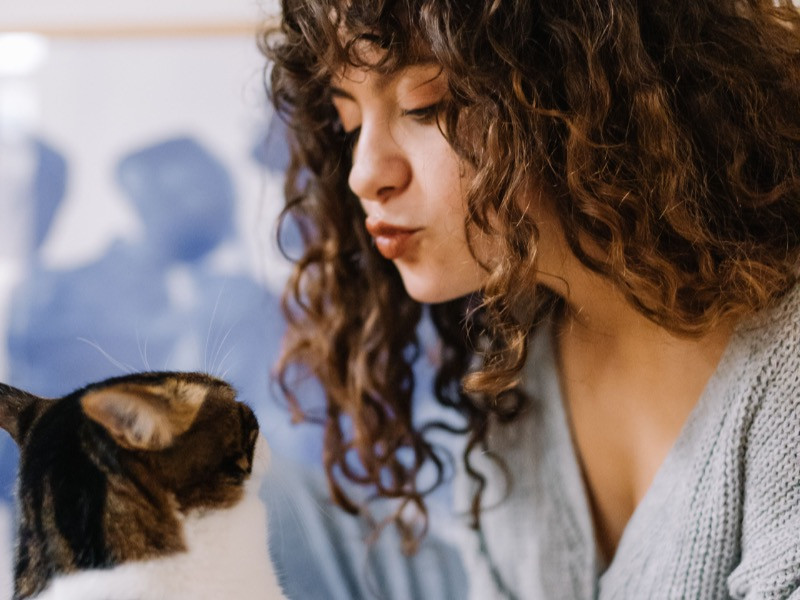
- Some pet owners in Southeast Asia are now paying animal communicators to tell them what their pets think, from WhatsApp readings in Kuala Lumpur and Singapore to live sessions at a Bangkok cat expo.
- The reason isn’t really about psychics. Pets have become children who can’t talk, and that creates a “translation gap” that someone will always offer to fill.
- Four behavioural mechanisms explain the demand: loneliness, uncertainty and ritual, the caregiver placebo effect and the Barnum effect.
- For brands, the lesson is to sell translation and reassurance, not just products: own the anxious moments (lost, sick, dying) and pair evidence with empathy.
Who Speaks for the Cat? Why Southeast Asia Pays to Translate Its Pets
Owners across Southeast Asia are paying strangers to tell them what their animals think. The reason isn’t really about psychics. It’s about what pets have become.
In short: As of 2026, animal communicators (sometimes called pet psychics) sell readings to pet owners in Thailand, Malaysia, Singapore, Indonesia and the Philippines, typically for the price of a vet consultation or more. Demand peaks when a pet is lost, sick or has died. Behavioural science explains why: pets are now treated as children who can’t talk, and their owners will pay to close that gap. The same need drives the growth of pet tech, pet funerals and preventive pet health across the region.
A cat, a shopping mall and a protein shake
In September 2026, at CATICON, a cat expo in a Bangkok shopping mall, an animal communicator gave a live reading on stage. The cat, Pluto, reportedly had views on his owner's grocery shopping and had noticed her daily protein drink. The owner was surprised by how much rang true.
This isn’t a Bangkok quirk. The same service sells across Southeast Asia, mostly over WhatsApp:
- Kuala Lumpur, Malaysia: RM168 an hour, with two or three clients a day.
- Singapore: S$240 for a 30-minute session.
- Indonesia: around Rp250,000 for a standard session in 2022, and Rp800,000 when the pet was missing.
Vets are unconvinced. In 2022, the head of Indonesia's veterinary association put believers among his members at fewer than 1%. But whether a communicator can really hear a cat is the wrong question for business. The right one is this: Why are so many owners willing to pay someone to translate their pet?
The translation gap
Illuminate Asia’s September 2026 Furry Economy briefing tracked how pets across Southeast Asia have moved from the yard into the family. Indonesians call them anabul (from anak bulu, “fur children”). In Bangkok, Manila and Singapore, owners call themselves “fur parents”.
That creates a gap. Human children eventually tell you what’s wrong, but fur children never will. When a dog stops eating or a cat disappears, the owner has love, responsibility and no information.
Any market with that gap will produce someone who offers to fill it.
Four forces behind the gap
- Loneliness: the lonelier we are, the more human our pets seem. Psychologist Nicholas Epley and colleagues found that people made to feel lonely rated their pets as more thoughtful, considerate and sympathetic. Smaller households, later marriage and owners away from home 10 to 12 hours a day in Jakarta, Bangkok and Manila all push this up. And the more human our pets seem, the more we want to know what they are thinking.
- Uncertainty: where control ends, ritual begins. Ritual appears where stakes are high and outcomes uncertain. Communicators earn their highest fees at exactly those moments: a pet that is lost, sick or has died. The price rises with the owner’s helplessness.
- The caregiver placebo: the owner is the patient. In a 2012 veterinary trial, dogs with arthritis were given a placebo. Owners reported improvement in 57% of cases, and even vets were fooled 40-45% of the time. Yet objective gait measurements showed little real change. When the patient can't speak, we see what we hope to see. A reading doesn't need to change the pet to change the owner.
- The Barnum effect: generic feels personal. In 1949, psychologist Bertram Forer gave students what he said were personalised personality profiles. They rated them as highly accurate, even though everyone received the same text. A line about a pet such as "she senses you've been busy lately" would fit most pets in most homes. That helps explain why reviews of Singapore's communicators range from "90% accurate" to "wrong or generic".
Local form, modern content
Southeast Asia has always had go-betweens for the animal world. In Indonesia, the pawang was the handler who could calm tigers, snakes or even the rain. The animal communicator borrows that role, the gifted intermediary, so the idea feels familiar rather than strange.
But listen to what the pets “say”. In one Malaysian reading, a rescue dog felt guilty about its owner’s breakup. Practitioners describe their work in imported New Age terms such as energy and Reiki. The message is modern therapy.
Tradition explains why the idea is believable, but modern life explains why people pay for it now.
Same need, different doors
Across Southeast Asia, the need is the same but the channel is localised:
- Thailand: live readings at cat expos, and Buddhist pet funerals at Bangkok temples, with cremation from around 1,500 baht and optional monks' blessings.
- Vietnam: pet funerals with eulogies and urns. One Ho Chi Minh City centre saw demand rise 30% in 2023, mostly from owners aged 25 to 35.
- Philippines: church blessings of pets around the Feast of St Francis of Assisi on 4 October.
- Singapore: premium remote readings from a photo.
- Malaysia: WhatsApp communicators, with training workshops imported from Singapore.
- Indonesia: lost-pet specialists, known locally as “ancom”.
The data side is selling the same promise. Smart litter boxes (USD 250 to 750) track a cat’s weight and visits and flag early signs of kidney or urinary problems. AI cameras watch pets while owners work. Pet tech in Southeast Asia is growing 18 to 22% a year. One translator uses intuition, the other uses sensors – yet both are paid to reduce the same anxiety.
What this means for brands
- Sell the translation, not just the product. Pet care is what economists call a credence good: owners can’t judge its quality even after buying. You can’t ask a cat whether the supplement works. Brands that turn a pet’s silence into information the owner can act on will earn trust.
- Own the anxious moments. Owners aren’t hiring information, they are hiring relief. The three biggest moments, when a pet is lost, sick or dying, are poorly served across most of the region.
- Pair evidence with empathy. The communicator listens and offers a story. Most brands offer evidence and nothing else. In a credence market, you need both.
- Don’t mock the believers. The owner who books a communicator is often the most engaged, highest-spending fur parent in the market. Treat the behaviour as a signal of need, not a punchline.
Also in this series: https://www.illuminateasia.com/blog/articles/detail/from-pet-to-persona-how-southeast-asias-animals-became-media-assets From Pet to Persona: How Southeast Asia’s Animals Became Media Assets.
Where Illuminate Asia Fits In
Southeast Asia’s Furry Economy is growing fast, but what owners want, and what they will pay for, differs market by market. Illuminate Asia combines behavioural science, marketing science and cultural insight to help brands understand the needs behind the behaviour, and turn them into products, services and communication that land.
Want to go deeper?
- Read the full strategic briefing: Email us to grab your copy (info@illuminateasia.com) - it sizes the regional market, deep-dives six ASEAN markets and maps what comes next as pets become family.
- Listen to our podcast: Illuminate Asia’s podcast on Youtube - Illuminate Asia Furry Economy Podcast - where we discuss the Furry Economy and what it means for brands in Southeast Asia.
- Talk to us: we’re happy to meet and discuss what the Furry Economy means for your brand, whether you’re planning a pet-related launch, partnership or content strategy in Indonesia, Thailand, Malaysia, the Philippines, Vietnam or Singapore. Get in touch at info@illuminateasia.com.
FAQs
- What is an animal communicator? - An animal communicator (sometimes called a pet psychic) claims to understand an animal’s thoughts and feelings, usually remotely from a photo. Across Southeast Asia, sessions are commonly sold over WhatsApp, with prices ranging from around Rp250,000 in Indonesia to S$240 in Singapore.
- Is there scientific evidence that animal communication works? - No controlled evidence supports it, and veterinary bodies are sceptical. In Indonesia, fewer than 1% of veterinary association members say they believe in it. The useful evidence is behavioural: research on anthropomorphism, ritual and the caregiver placebo effect explains why the service meets a real human need.
- Why are pet owners in Southeast Asia using animal communicators? - Pets are increasingly treated as children, but they can’t say what’s wrong. Demand peaks at moments of high uncertainty, when a pet is lost, unwell or has died, and the service offers reassurance and a story.
- What is the caregiver placebo effect? - When someone cares for a patient who can’t report their own symptoms, their judgement is shaped by hope. In a 2012 veterinary trial, owners rated more than half of the dogs on a placebo as improved, while objective measures showed only about 12% had.
- What does this mean for pet brands in Southeast Asia? - Owners are paying for reassurance and interpretation, not just products. Brands that help owners understand their pets, especially at anxious moments, can command more trust and loyalty.
- How does this connect to pet tech? - Smart litter boxes, AI cameras and GPS collars make the same promise as the communicator: to tell owners what their pet can’t. Pet tech is growing 18 to 22% a year in Southeast Asia.
References:
- Maya Channel (September 2026): Animal Healings and Communication Thailand at CATICON
- Free Malaysia Today (December 2025): Pet communicator Amanda Pan helps animals feel heard
- Vulcan Post (July 2025): Would you pay someone to talk to your pet?
- PACT: Animal communication workshops in Malaysia
- detik (July 2022): Berapa bayaran jadi animal communicator?
- CXO Media (May 2022): Menguji keabsahan animal communicator
- Mojok: Animal communicator dan bagaimana mereka mencari kucing yang hilang
- The Nation Thailand (April 2025): A peaceful pet farewell at Wat Khlong Toei Nai
- VnExpress (October 2023): Pet funerals becoming a big deal
- Philippine News Agency: Pet blessing in homage to St Francis of Assisi
- Veterinary Prescriber: The caregiver placebo effect in pet treatments
- Greater Good Magazine (UC Berkeley): Seeing human
- https://20.detik.com/detikupdate/20260111-260111015/video-cerita-pengalaman-pakai-jasa-ancom
Academic and industry sources:
- Epley, N., Waytz, A. and Cacioppo, J. T. (2007). On seeing human: A three-factor theory of anthropomorphism. Psychological Review, 114(4).
- Epley, N., Akalis, S., Waytz, A. and Cacioppo, J. T. (2008). Creating social connection through inferential reproduction. Psychological Science, 19(2).
- Malinowski, B. (1948). Magic, Science and Religion and Other Essays. Free Press.
- Conzemius, M. G. and Evans, R. B. (2012). Caregiver placebo effect for dogs with lameness from osteoarthritis. Journal of the American Veterinary Medical Association, 241(10).
- Forer, B. R. (1949). The fallacy of personal validation. Journal of Abnormal and Social Psychology, 44(1).
- Darby, M. R. and Karni, E. (1973). Free competition and the optimal amount of fraud. Journal of Law and Economics, 16(1).
- https://pubmed.ncbi.nlm.nih.gov/23113523/
- Illuminate Asia (2026). The Southeast Asia Furry Economy: Strategic Briefing, September 2026.