

- Across Southeast Asia, pets are moving from family members to media assets, earning money through licensing, endorsements and live commerce.
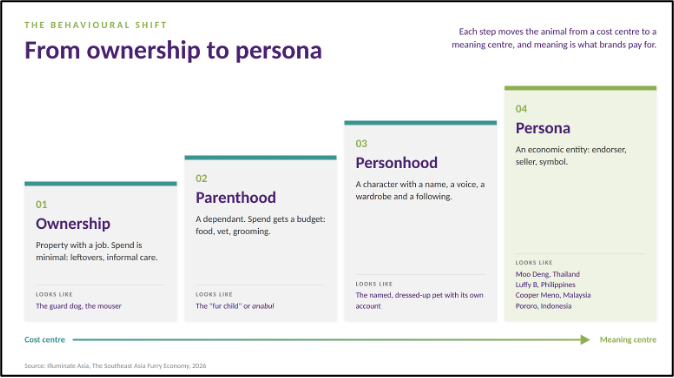
- A four-step ladder explains the shift: Ownership, Parenthood, Personhood and Persona. Each step turns the animal from a cost centre into a meaning centre.
- Regional examples include Moo Deng (Thailand), Cooper Meno (Malaysia), Luffy B (Philippines), Pororo and Bobby Kertanegara (Indonesia), Vietnamese petfluencers and Singapore’s Pawjourr network.
- Behavioural and marketing science (baby schema, parasocial bonds, meaning transfer and distinctive brand assets) explains why it works, and what brands should do next.
From Pet to Persona: How Southeast Asia’s Animals Became Media Assets
A hippo with a trademark. A smiling dog with a talent agent. A stray cat at the presidential palace. Southeast Asia’s animals aren’t just loved any more. They’re working.
In short: as of 2026, animals across Southeast Asia, particularly in Thailand, Malaysia, the Philippines, Indonesia, Vietnam and Singapore, are becoming commercial assets in their own right. Famous animals now earn through trademark licensing, brand endorsements, live commerce and talent agencies. The shift is driven by pets being treated as family, by social media, and by well-established behavioural science on how people respond to animals.
A hippo with a trademark
In July 2024, a baby pygmy hippo was born at Khao Kheow Open Zoo in Thailand. More than 20,000 people voted on her name; they chose Moo Deng (“bouncy pork”).
By September 2024, daily visitor numbers at the zoo had doubled. By October, the zoo authority had run a design contest that drew 1,895 entries, put 10 finalists to a public vote that attracted more than 100,000 votes, and registered the winning logo as a trademark. Thirty-eight companies were licensed to put her face on their products. Moo Deng doesn’t belong to a family. She belongs to a state zoo. And she’s one of the most commercially valuable animals in Southeast Asia.
Somewhere along the way, pets stopped being a cost and became an asset.
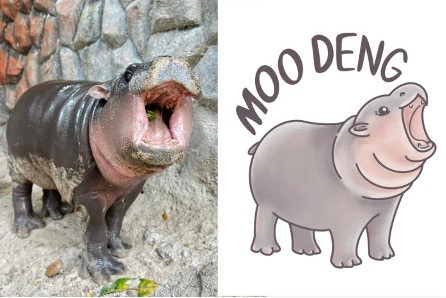
PHOTO 1: Moo Deng, credited news photo. Moo Deng: born July 2024, trademarked by October: https://www.khaosodenglish.com/news/business/2024/10/17/moo-deng-phenomenon-sparks-business-growth-secures-trademark/#goog_rewarded
The ladder: from ownership to persona
Animals in Southeast Asia are climbing four steps, and each step changes what they’re worth:
- Ownership. The animal is property with a job, such as guarding or catching mice. Spending on it is minimal.
- Parenthood. The animal becomes a dependant. Food, vet care and grooming get a budget.
- Personhood. The animal gets a name, a voice, a wardrobe and a following.
- Persona. The animal becomes an economic entity: an endorser, a seller, a symbol.
Each step moves the animal from a cost centre to a meaning centre, and meaning is what brands pay for.
Same species, different jobs: six markets
- Thailand: Moo Deng (pygmy hippo). Intellectual property: a registered trademark, product licensing and brand tie-ins.
- Malaysia: Cooper Meno (Maltese). The model: a professional “pawdel” working with brands such as Addidas, Pedigree, Calvin Klein etc
- Philippines: Luffy B (Shih Tzu). The celebrity: 1.7 million TikTok followers, a talent agency and sponsors including Barky Co, Royal Canin, Fab Paw and several resorts and hotels.
- Indonesia: Pororo (rescued street cat). The sales engine: the cat holds the live stream while the owner sells.
- Indonesia: Bobby Kertanegara (adopted stray). The symbol: about one million Instagram followers, a named stroller and gifts from foreign visitors.
- Vietnam: cat “Sói” and dog Momo Inu. Mainstream endorsers: deals with Lifebuoy, Sunlight, Grab and Viettel, most of them non-pet brands.
- Singapore: the Pawjourr network. Industrialised talent: more than 30,000 pet creators and over USD 10 million paid out.
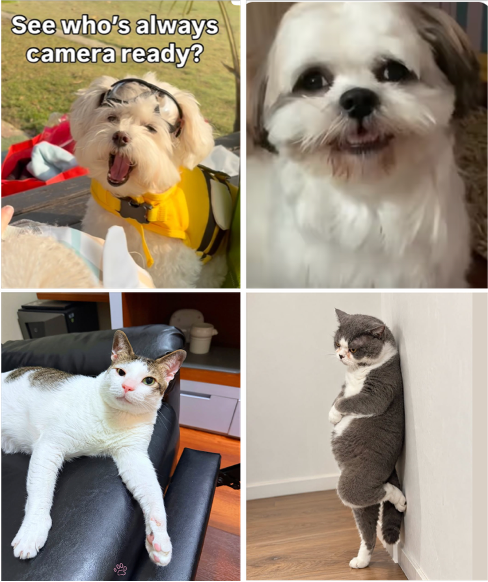
Photo sources: https://www.instagram.com/cooper_meno_maltese/; https://www.tiktok.com/@luffyyyb; https://www.instagram.com/bobbykertanegara/?hl=en; https://www.facebook.com/soibetihello/
Look at Luffy B’s career. In 2021 he went viral for one thing: smiling after a trip to the groomer in Imus, near Manila. Within months he had an Airbnb campaign. Today he has 1.7 million followers and a talent agency handling his bookings. That’s the full ladder, from family dog to managed talent, in about five years.
The rescue premium
Look again at the list. Pororo and Bobby were strays. So was Kabang, the Philippine dog who threw herself in front of a motorcycle to save two children in Zamboanga City on 14 December 2011. Donors around the world funded her reconstructive surgery in California, and she was later honoured with a statue in Zamboanga City (2021) and a Philippine postage stamp (2023).
Across Southeast Asia, a rescue story works as trust capital. It tells audiences the owner cares, so whatever follows reads as sincere rather than salesy.
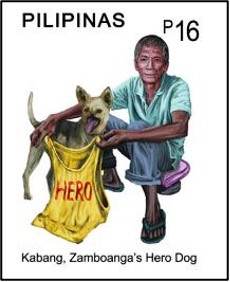
PHOTO: https://upload.wikimedia.org/wikipedia/commons/0/01/2023_Historic_dogs_of_the_Philippines_stamp
Why it works: four mechanisms
- Attention: baby schema. Ethologist Konrad Lorenz showed that big eyes, round faces and small noses trigger an automatic caregiving response. Cats and small dogs keep those features for life. Luffy’s smile stops the scroll before any message arrives.
- Attachment: parasocial bonds. Daily, low-stakes content builds a one-sided but real relationship (Horton and Wohl, 1956). Viewers feel they know Cooper or Pororo, so a recommendation feels like advice from a friend.
- Transfer: meaning transfer and the affect heuristic. The warm feeling created in the first three seconds spills onto whatever appears next, including the product (McCracken, 1989; Slovic et al., 2007). And an animal can’t be accused of selling out.
- Memory: distinctive assets. In Ehrenberg-Bass terms, a famous animal is a distinctive brand asset: a face, a name and a format you recognise without a logo. Content built around feeding time, grooming or walks links the brand to real category entry points, the moments when people actually buy.
A petfluencer isn’t a campaign. It’s an always-on asset that refreshes memory at almost no extra cost.
The view from Japan
Japan shows where this goes. In January 2007, the struggling Wakayama Electric Railway appointed a stray calico cat called Tama as station master at Kishi Station. Kansai University economist Katsuhiro Miyamoto estimated her economic effect in her first year at around ¥1.1 billion, and annual passengers on the line rose from 1.92 million (2005) to 2.27 million (2014). When she died in 2015, more than 3,000 people attended her funeral. Japan now has a word for it, nekonomics, coined by Miyamoto, whose latest estimate puts Japan’s cat-related economy at around ¥2.95 trillion for 2026.
Southeast Asia is earlier on the same curve.
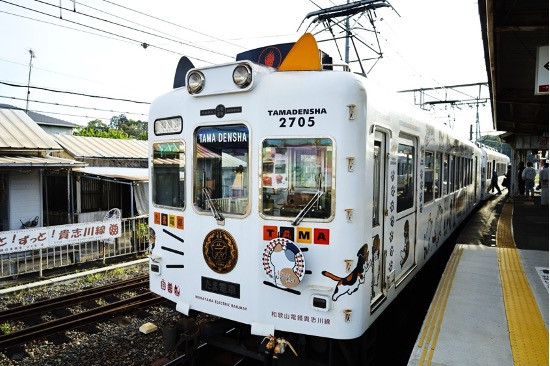
What this means for brands
- Buy the character, not the post. A one-off sponsored post wastes the memory structure an account has spent years building. Think in long-term partnerships.
- Fit the ritual, not the follower count. Luffy’s smile after grooming is made for grooming and wellness brands, and his travels suit travel brands. Match the product to the animal’s real routine.
- Protect the sincerity. Over-scripting kills the thing that makes pet content credible. Leave most creative control with the owner.
- Watch the welfare line. Costumes, travel and performance demands carry reputational risk for the brand as well as the creator. When it stops looking like care, it stops working.
Where Illuminate Asia Fits In
Southeast Asia’s Furry Economy is growing fast, but the rules differ market by market: which animals lead, which platforms convert, and which stories audiences trust. Illuminate Asia combines behavioural science, marketing science and cultural insight to help brands find their role, choose the right partners and avoid the missteps.
Want to go deeper?
- Read the full strategic briefing: Email us to grab your copy (info@illuminateasia.com) - it sizes the regional market, deep-dives six ASEAN markets and maps what comes next as pets become family.
- Listen to our podcast: Illuminate Asia’s podcast on Youtube - Illuminate Asia Furry Economy Podcast - where we discuss the Furry Economy and what it means for brands in Southeast Asia.
- Talk to us: we’re happy to meet and discuss what the Furry Economy means for your brand, whether you’re planning a pet-related launch, partnership or content strategy in Indonesia, Thailand, Malaysia, the Philippines, Vietnam or Singapore. Get in touch at info@illuminateasia.com.
FAQs
- What is a petfluencer? - A petfluencer is an animal with a social media following large enough to attract brand partnerships. In Southeast Asia, examples include Luffy B in the Philippines (1.7 million TikTok followers) and Cooper Meno in Malaysia.
- Why do pet influencers work so well for brands? - Animals trigger an automatic caregiving response (baby schema), build one-sided bonds through daily content (parasocial relationships), and are seen as free of commercial motive. That makes the warmth they create transfer easily to the brands that appear alongside them.
- Do pet influencers only suit pet brands? - No. In Vietnam, pet accounts work with Lifebuoy, Sunlight, Grab and Viettel, and in the Philippines Luffy B has worked with Airbnb. The animal attracts a broad audience, not just pet owners.
- What is the Ownership to Persona ladder? - It is Illuminate Asia’s four-step model of how animals gain economic value: Ownership (property), Parenthood (dependant), Personhood (named character with a following) and Persona (endorser, seller or symbol).
- What risks should brands consider? - Animal welfare is the biggest. Costumes, travel and performance demands can turn affection into criticism quickly. Over-scripted content also damages the sincerity that makes pet content credible.
- Which Southeast Asian market is most advanced? -= Singapore has the most industrialised petfluencer market, through networks such as Pawjourr. Thailand leads on licensing, with Moo Deng. Indonesia leads on live commerce. Japan, with its “nekonomics”, shows where the region is heading.
References:
- Khaosod English (Oct 2024): Moo Deng phenomenon sparks business growth, secures trademark
- My Modern Met: How Moo Deng’s logo was chosen
- Wikipedia: Moo Deng
- YouTube: Cooper Meno Maltese
- Instagram: Cooper Meno
- The OMG (2021): Meet Cooper Meno the Super-Pawdel
- TikTok: Luffy B
- PageOne (2021): Luffy B unveils his wishlist of pet-friendly Airbnb stays
- UC Davis (June 2013): Veterinarians release hero dog Kabang for return to Philippines
- Inquirer (March 2021): Zamboanga’s hero dog honored with statue
- Rappler (November 2023): PHLPost launches Dogs in Philippine History special stamps
- Wikipedia: Kabang
- Wikipedia: Bobby Kertanegara
- Antara News: Australian PM gifts scarf collar to Bobby
- TheInfluencer.vn: Top pet influencers in Vietnam
- Vulcan Post: The Woof Agency, Singapore
- NPR via KCUR (June 2015): Tama, the cat that saved a Japanese train station, dies
- The Guardian (June 2015): 3,000 attend elaborate funeral for Japan’s feline stationmaster
- FUN! JAPAN (February 2022): Tama the station master
- Visit Wakayama (official tourism site): Ultra Stationmaster Tama at Kishi Station
- Osaka Area News (February 2026): Kansai University study unveils cats’ ¥2.95 trillion nekonomics impact
- GuruFocus (February 2026): Japan’s nekonomics hits nearly 3 trillion yen annually
Academic and industry sources:
- Lorenz, K. (1943). Die angeborenen Formen möglicher Erfahrung (Kindchenschema). Zeitschrift für Tierpsychologie.
- Horton, D. and Wohl, R. R. (1956). Mass communication and para-social interaction. Psychiatry, 19(3).
- McCracken, G. (1989). Who is the celebrity endorser? Journal of Consumer Research, 16(3).
- Slovic, P., Finucane, M., Peters, E. and MacGregor, D. (2007). The affect heuristic. European Journal of Operational Research, 177(3).
- Romaniuk, J. (2018). Building Distinctive Brand Assets. Oxford University Press.
- Romaniuk, J. and Sharp, B. (2016). How Brands Grow Part 2. Oxford University Press.
- Illuminate Asia (2026). The Southeast Asia Furry Economy: Strategic Briefing, September 2026.
- Pororo case: Illuminate Asia internal Think Tank, “Indonesian Celebrity Cats”, 30 September 2026.