


In today’s digital landscape, brands are no longer distant corporate entities. They speak in memes, reply to random posts, join pop-culture conversations, and adopt tones that mirror everyday online chatter. This shift makes brands feel more human, more relatable, and more embedded in the daily lives of consumers.
But with this humanization comes a new tension: parasocial expectations. As audiences form emotional familiarity with brands, they begin treating them like people; expecting tact, consistency, and social awareness. When a brand’s joke steps outside these expectations, backlash can unfold instantly.
The Somethinc – ARMY incident, when Humour Misses the Mark
A recent example comes from Somethinc, one of Indonesia’s leading skincare brands, which faced backlash after responding to a viral post on X (formerly Twitter). The post compared RM (Kim Namjoon), leader of the global K-pop group BTS, with Indonesian host Indy Barends. Somethinc’s official account joined the conversation and left a comment that fans perceived as sarcastic and disrespectful toward their idol, sparking criticism from the BTS fanbase, known as ARMY.
What could have been harmless banter quickly escalated into a wave of backlash, with ARMYs responding through angry quote-tweets, mass reporting of the brand’s account, and public calls for accountability.
The incident struck a nerve because it touched on several sensitive intersections:
- a passionate fandom with strong emotional ties to their idol,
- a brand adopting a casual “internet voice,”
- and the blurred line between humour and disrespect in highly engaged digital communities.
It highlights a bigger shift: as brands act more human-like, in conversational ways online, audiences expect them to carry the same sensitivity and social awareness that real people would. When that expectation isn’t met, even light comments can feel personal and trigger a strong emotional response.
Where Things Went Wrong: A Voice That Didn’t Match the Brand
For years, brands have tried to build deeper connections with audiences. The foundation of that connection is clarity: knowing your brand core and ensuring that every expression of your brand reflects it.
Somethinc, as a brand, is built on a very specific core:
- Clinically driven, science-backed skincare
- High-performance ingredients for smart, informed consumers
- A professional, expert-led identity
- Reinforced by their tagline: “You’re unstoppable”
This positions them as a trustworthy, innovative, expert-driven skincare authority.
But their tone on platforms like Twitter sometimes leans into casual banter and sarcastic one-liners, a voice more fitting for meme-driven, irreverent brands. This creates a disconnect. The brand’s product philosophy and visual identity feel sophisticated and science-led, yet the social media tone occasionally lands in a different territory.
This mismatch is part of what made the recent comment feel “off.” It wasn’t simply a joke that fell flat; it felt out of character for a brand positioned as professional and expert-led. When tone and identity don’t match, the audience notices.
Where Things Went When Humour Works: Learning from Brands Like Ryanair: A Voice That Match the Brand
Humour itself isn’t the problem. Many brands use humour brilliantly, when it fits who they are.
To understand Somethinc’s misstep, it helps to look at a brand that does humour right: Ryanair.
The European low-cost airline has become a masterclass in building a bold, distinctive online personality; not because it tries to be funny, but because its humour is perfectly aligned with its brand reality.
Ryanair is cheap, bare-bones, and unapologetic, and their humour mirrors that DNA. Their voice is blunt, chaotic, sarcastic, and proudly low-budget; the exact qualities people already associate with flying them. Instead of trying to polish their image, they lean straight into their flaws. Things like cramped seats, endless add-on fees, delays, and customer complaints become punchlines they openly joke about; in return, it builds relevancy rather than undermining the brand.
They also deeply understand internet culture. Their content feels native to platforms like TikTok: quick cuts, meme references, trend-hopping, yet never in a try-hard way. They don’t imitate Gen Z humour; they speak it fluently. And importantly, the voice is consistent everywhere. Whether on TikTok, Instagram, or Twitter (X), Ryanair shows up with the same chaotic personality, so audiences always know what they’re getting.
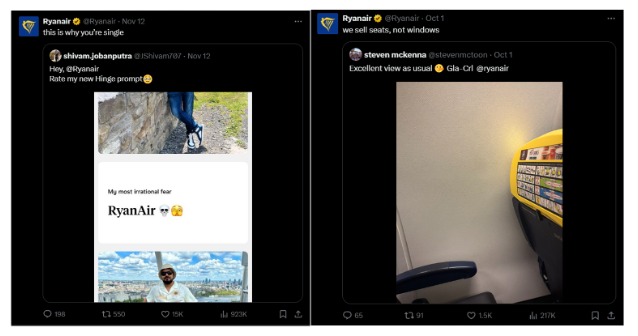
Crucially, it works because humour is part of their core identity, not an experiment or seasonal campaign; audiences expect it. Ryanair is seen as an internet character, not a corporate account trying to go viral.
A Brand That Plays Online Without Losing Itself: Toshiba TV Indonesia
Another example of humour done right comes from Toshiba TV Indonesia. Like Somethinc, the brand often jumps into comment threads and joins casual conversations on X. The difference is that their humour stays tightly connected to their core identity. Toshiba TV positions itself strongly around entertainment, especially sports and Japanese culture, which naturally ties back to its product focus on televisions and home electronics.
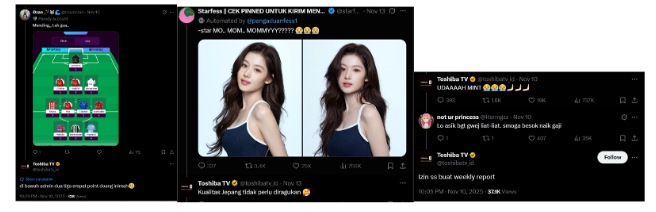
Because of this, their online behaviour feels coherent. They make light-hearted remarks about football because they market themselves as the TV brand people use to watch big matches. They reference Japanese celebrities or cultural moments because the brand’s heritage is part of what consumers already associate with them. Even when they’re playful, the tone always loops back to what Toshiba stands for.
This familiar and consistently on-brand tone makes users more willing to respond and play along. The brand stops feeling like an ad in their timeline and starts feeling like a friend who shares the same jokes and interests. Instead of treating the posts as noise, people actively invite the interaction by replying, teasing back, and creating a natural sense of closeness with the brand.
The New Reality: Social Media is More Personal Than Ever
All of this leads to one clear message: sounding human online isn’t a quick trick to get attention. It’s something brands need to approach with intention. When a brand joins everyday conversations, people don’t see it as “just a company” anymore. They react the way they would with a real person. They notice the tone, they expect consistency, and they remember how the brand makes them feel.
This means:
- engagement is no longer just transactional
- audiences now expect relational consistency
- emotional investment influences how messages are received
- “relatability” can backfire when misaligned with brand identity
The answer isn’t to avoid trends or humour, but to build a voice that genuinely fits the brand. When the tone reflects who the brand really is, people feel more connected to it. And when the people representing the brand, whether it’s the social media admin, a KOL, a host, or anyone who becomes a touchpoint, naturally embody that personality, the brand feels more human and consistent. This alignment makes interactions feel more authentic and meaningful, helping brands communicate in ways that deepen connection rather than create distance.
In the end, the brands that will succeed are the ones that show up consistently and honestly. They don’t need to be louder or trendier. They just need to be clear about who they are and how they want to connect with the people who follow them.
Strong brand voices don’t happen by accident. They come from cultural insight, deep audience understanding, and a clear, consistent identity. As social media becomes more human, people respond less to content and more to personality. That demands emotional nuance, cultural sensitivity, and authenticity that can’t be faked.
This is where Illuminate Asia helps. We work with clients to decode cultural signals, understand how people interpret tone and behaviour online, map the expectations within each category, and translate those insights into communication strategies that build trust rather than risk backlash.
If you’d like to explore how your category behaves in today’s evolving digital culture — or rethink your brand communication strategy for 2026 and beyond — we’d love to partner with you. To start a discussion, contact us at info@illuminateasia.com
FAQs
- What is a “parasocial relationship”? It’s a one-sided emotional bond people form with public figures or with a brand, even without direct interaction. Online, this makes audiences more sensitive to brand behaviour.
- What do you mean by brands becoming “more human”? Brands now talk like people: using memes, jokes, casual language, and joining everyday conversations. This creates familiarity but also raises expectations for empathy and awareness.
- What is “brand voice” or “brand personality”? The tone, style, and character a brand consistently uses when communicating. It should reflect the brand’s core identity, not just what’s trendy online.
- Why did the Somethinc–ARMY incident cause backlash? The backlash happened because fans felt the brand’s comment didn’t match its expert-led identity. The mismatch between Somethinc’s “science-driven skincare authority” positioning and its casual, sarcastic online response made the joke feel out of character and disrespectful.
- How can humour backfire for brands on social media? Humour can backfire when it contradicts the brand’s core identity, misreads cultural context, or ignores the emotional attachments that fans have with public figures. Even light jokes can feel offensive when parasocial expectations are high.
- Which brands are good examples of humour done right? Ryanair and Toshiba TV Indonesia are often cited as examples of brands that use humour effectively. Their humour is consistent, aligned with their brand DNA, and deeply attuned to internet culture — which makes their tone feel natural rather than forced.
- How can brands stay funny online without risking a PR crisis? Brands can safely use humour by grounding it in their core identity, training social media teams on tone consistency, monitoring cultural signals, and understanding fan or community sensitivities. Humour works best when it feels organic to who the brand is
- What does “brand voice consistency” mean? Brand voice consistency means showing up with the same tone, personality, and values across every touchpoint — from ads to tweets to customer service replies. Inconsistent tone makes brands seem inauthentic or confusing, especially in fast-moving online spaces.
- How do parasocial expectations impact brand communication? As brands behave more “human,” audiences start expecting human-level sensitivity. People now respond to brands emotionally, not just transactionally — which means tone, nuance, and context matter more than ever.
- How can brands prevent social media missteps like this in the future? The key is having a clear brand voice framework, culturally informed social media guidelines, scenario planning, and ongoing training for admins or content teams. Regular cultural-context monitoring helps too.
- How does Illuminate Asia help brands navigate digital culture? Illuminate Asia uses cultural insight, semiotics, and audience understanding to help brands decode online behaviour, define clear brand voices, and communicate in ways that build trust. We help brands understand category norms, fan communities, and cultural sensitivities to avoid backlash and strengthen engagement.
- What should a brand do when they face backlash from a fandom or online community? Respond calmly, acknowledge concerns without escalating, clarify intent, and avoid defensive or sarcastic replies. It’s also crucial to align any response with the brand’s core identity — not just crisis control tactics.
- Is humour still worth using for brands in Southeast Asia? Yes — humour performs exceptionally well in Southeast Asia, but only when it fits the brand. Local cultural nuance, platform style, and community expectations must guide the execution.
Reference Links: