

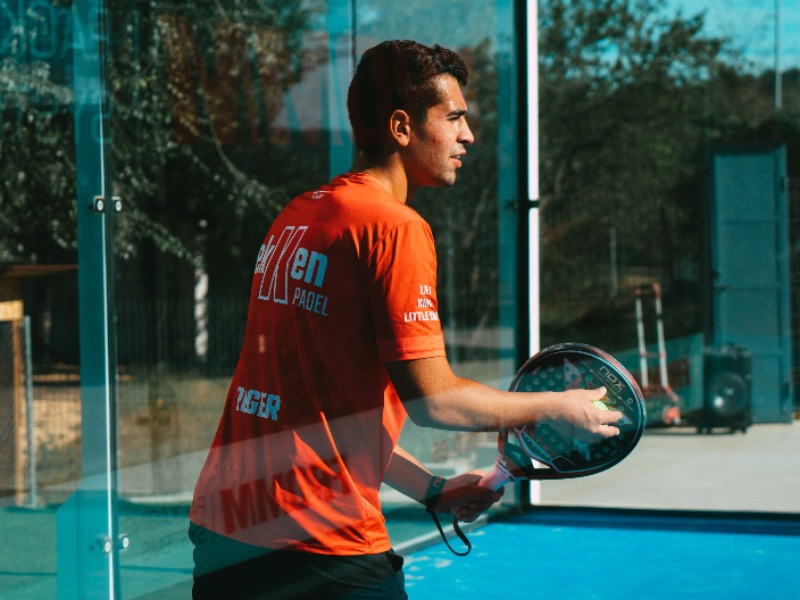
Two racquet sports swept Southeast Asia at the same time, and they went to different countries. Indonesia built padel. Vietnam and Malaysia built pickleball. The reason is not what most people assume, and it matters for anyone investing behind a consumer trend.
Between 2021 and 2025, Indonesian padel courts grew from 15 to more than 900, with revenue per court rising roughly 173%, the fastest growth rate anywhere in the world. Over the same period, Ho Chi Minh City built an estimated 1,000 pickleball court complexes, and Vietnamese racket sales reached around VND 1 trillion in the first ten months of 2025, up nearly 700% year on year.
The intuitive explanation is construction cost. Pickleball needs almost no purpose-built facility. You can convert a badminton hall, a tennis court, a warehouse or a car park. Padel requires a purpose-built glass box costing several times more.
If that explanation were sufficient, Indonesia should have chosen pickleball as well. It is more price-sensitive than Malaysia. Its middle class has been contracting since 2019. And it has arguably the strongest badminton culture in the world, which should have made an easy racquet sport an easy sell.
It went the other way. And the reason reveals something useful about how status actually works in a market.
Why the price is important
Padel in Jakarta rents at roughly Rp 250,000 to 700,000 an hour. Futsal, on the same evening, in the same city, costs Rp 50,000 to 150,000. Both are ninety minutes of running around with friends. So what is the extra Rp 550,000 buying?
Not a better game. It is buying the fact that not everyone can be there.
This is what economists call costly signalling, and it is the mechanism Haris Rahmanto, Indonesian Country Head, identifies in his recent article (“The Architecture of Trend”) as the engine of any status trend. A signal is something visible that says something about you that people cannot otherwise see. Michael Spence made the point in 1973 using education: an employer cannot observe how capable you are, but they can observe that you have a degree, and if degrees are easier for capable people to get, the degree becomes reliable information regardless of what the course actually taught.
The price is what makes it work. A signal that costs nothing gets sent by everybody, and immediately stops telling anyone anything. Which means the information in a padel booking is not in the sport. It is in the affordability, and in who else is on court. Keep the game and remove the price and you have kept the exercise while deleting the message.
This is why a discounted version of a status product is so rarely the same product. And it is the first reason to be suspicious of the idea that Indonesia should have chosen the cheaper sport.
Why "badminton got there first" does not explain it
Here is where the theory needs a correction, and it is worth stating plainly rather than quietly working around.
The tempting explanation for Indonesia is that badminton got there first. Badminton is played by around 56% of Indonesians, it carries genuine prestige rather than being a default, and it already occupies exactly the space pickleball offers: cheap, sociable, indoor, doubles, playable badly. On that reading, pickleball arrives offering a less prestigious version of something Indonesians already do well.
The problem is that Malaysia and Vietnam both have strong badminton cultures too, and pickleball boomed in both. If badminton blocked pickleball in Jakarta, it should have blocked it in Kuala Lumpur and Ho Chi Minh City. It did not.
So badminton is not the cause. Look at how each boom actually started and a different pattern appears.
- Vietnam’s pickleball came through tennis, not badminton. The early evangelists were tennis coaches who became content creators, followed by elite tennis players switching codes because pickleball sponsorship paid better than life on the fringes of the professional tennis tour. Operators converted existing tennis facilities, including the country’s largest tennis complex.
- Malaysia’s came through property. Operators converted vacant retail and warehouse floorspace, including an 18-court venue inside a hypermarket. Badminton’s institutions made room rather than resisting: Olympic medallist Goh Liu Ying publicly promoted the sport and folded it into youth programmes. State governments put money behind it, and it was added to the 2026 Malaysia Games
- Indonesia’s pickleball landed somewhere else entirely. It has a national federation, but that federation sits under the national Olympic committee, with an explicit athlete-development and medal-pathway framing. Its tournaments run through universities and national student championships. It was set up as a sport to win medals in, not a leisure business to sell memberships for. It shows: roughly fifteen venues appear on the country's main sports booking platform, and court occupancy runs at around 41% against padel's 75%.
- Meanwhile Indonesian padel landed with commercial operators, futsal-court converters, landowners with idle plots and celebrities, including one venue with eight courts built by a major television personality.
Same two sports, four countries, and the deciding variable was which channel each one fell into. Athlete development in one case, property conversion in another, creator economy in a third, celebrity and land arbitrage in the fourth. The results follow the channel, not the game.
Badminton still matters in Indonesia, but as a contributing condition rather than a cause. It means pickleball has no distinctiveness to offer, so when it lands in an institutional channel rather than a commercial one, nothing pulls it into the consumer market. In Malaysia the commercial channel was available and badminton’s own stars opened the door.
An honest caveat: this is the best available explanation, not a settled one. Other readings survive the evidence, including simple path dependence, that a handful of early Jakarta operators and one very large celebrity made padel the default before anyone had time to consider alternatives. What would separate them is data nobody has yet published: whether Indonesian badminton halls have converted to anything, and how many registered pickleball players Indonesia actually has.
Why the crash arrives before the trend dies
Haris's article describes what happens on the demand side when a distinction signal scales: the early adopters leave, the signal collapses, and the brand is left holding a dead trend.
Southeast Asia is currently demonstrating the supply-side version of the same failure, and it arrives first.
Vietnam’s pickleball boom is already over. Court occupancy has fallen below 50% year on year. Hanoi districts report courts empty on weekday mornings. Operators are discounting and bundling free equipment. Player numbers reportedly halved by early 2026. The Vietnam Pickleball Federation was finally established in July 2026, thirty months after the boom began and after it had already broken.
Indonesia’s padel sits roughly eighteen months behind on the same road, on a considerably more expensive asset.
We know how this ends, because Sweden already ran the experiment. Swedish padel courts went from a few hundred in 2019 to over 4,000 by 2022. Then 113 padel halls entered bankruptcy. One private-equity-backed operator wrote down SEK 716 million and closed 50 of its 63 Swedish clubs. Halls were converted into warehouses and discount supermarkets.
And this is the crucial detail: Swedish demand never collapsed. There were still over 600,000 players in 2024, more than at the 2021 peak. Unique players booking courts fell 22% during 2022 while operators were still building.
It was an oversupply crisis, not a demand crisis.
The mechanism is what economists call an information cascade. Bikhchandani, Hirshleifer and Welch showed in 1992 that rational actors observing others’ decisions will infer information from those decisions and stop consulting their own evidence. Operators saw other operators building courts and read that as proof of demand. They were reading a supply signal and pricing it as a demand signal.
This matters because it means the usual advice, watch for the moment the mass market adopts your signal, arrives too late. By the time consumers start abandoning a format, the overbuild has already happened.
The asymmetry that decides whether your investment appreciates
For brands and investors, the useful takeaway is not about racquet sports at all. It is about a property of the asset you have bought.
- Distinction signals have negative network effects. Their value comes from scarcity, so every additional adopter destroys a little of what the earlier adopters paid for. Growth in penetration is, mathematically, depreciation.
- Solidarity rituals have positive network effects. Their value comes from participation, so every additional adopter makes the thing more valuable to everyone already in it. Growth in penetration is appreciation.
The same physical activity can be either, depending on the market. Padel in Kuala Lumpur is a distinction signal, described by Tatler as “the new status sport” for “entrepreneurs, creatives and tastemakers”, with no mass price tier in sight. Padel in Jakarta is something quite different: over 70% of bookings are group or social, and in Jakarta specifically the split runs 42% community against 34% individual. Indonesians talk about it through bareng-bareng, doing things together. Digital matchmaking through booking apps removed the membership barrier, which is what let it escape the elite.
Jakarta accidentally bought the appreciating asset. Kuala Lumpur bought the depreciating one. Neither market planned it that way.
What to do with this
The marketing science conclusion is familiar, even if the route here is not. Formats rotate. Category entry points do not.
A brand attached to a format has to rebuild its mental availability every time the format turns over, which in this region is running at roughly 18 to 36 months. A brand attached to an existing routine inherits the routine’s durability. That is why modernised traditional formats keep outperforming: they are not competing for a new occasions, they are already in one.
So before committing behind a trend, three questions are worth more than any market-size forecast:
- Is the thing you are buying valuable because it is scarce, or because it is shared? One of those gets worse as it grows.
- Are you reading demand, or are you reading other people’s supply? Court counts, store openings and competitor launches are supply signals. Occupancy, repeat rate and utilisation are demand signals. Most trend investment confuses the two, and Sweden shows what it costs.
- Which channel does this sit in, in this market? The same product routed through celebrity capital, property conversion or an institutional sports body will produce three different outcomes. Identify the channel before copying the format.
Formats will keep rotating. The needs underneath them, health control, status, belonging, and relief from anxiety, will not. Invest in the use case, not the venue.
Where Illuminate Asia Fits In
Illuminate Asia helps brands read cultural signals before they show up in the sales data. We combine consumer research, semiotics and marketing science across Southeast Asia to tell you which trends are appreciating assets, which are already correcting, and which mean something different in each of your markets.
If you are making an investment decision behind a consumer trend and want to know whether you are reading demand or reading other people’s supply, get in touch: info@illuminateasia.com
FAQs
What is a signal in marketing and behavioural science?
A signal is something observable that communicates something unobservable. Economist Michael Spence showed in 1973 that signals only carry information if they are costly enough that a weaker sender could not fake them. If a signal is free, everyone sends it and it stops being informative.
Why did padel succeed in Indonesia when pickleball is cheaper?
Partly because a status signal has to be expensive to work, so a cheap alternative cannot substitute for it. But the fuller explanation is channel. Indonesian padel was taken up by commercial operators, celebrities and property investors, while Indonesian pickleball was routed through the national Olympic committee as an athlete-development project rather than a consumer business.
Doesn't Malaysia have a strong badminton culture too?
Yes, which is exactly why "badminton blocked pickleball" is not a sufficient explanation. Malaysian badminton's institutions actively promoted pickleball, including Olympic medallist Goh Liu Ying, and operators converted vacant retail and warehouse space. Malaysia now runs pickleball as a mass format and padel as a luxury one.
How did pickleball start in Vietnam?
Through tennis rather than badminton. Tennis coaches became content creators promoting the sport, elite tennis players switched codes for better sponsorship income, and operators converted existing tennis facilities.
Is the Southeast Asian padel boom over?
Vietnam's pickleball boom has largely corrected, with occupancy below 50% and player numbers reportedly halving by early 2026. Indonesian padel shows earlier-stage warning signs on a more capital-intensive asset, with somewhere between 900 and 2,500 courts depending on the source and whether the construction pipeline is counted.
What happened to padel in Sweden?
Swedish courts grew from a few hundred in 2019 to over 4,000 by 2022, after which 113 padel halls went bankrupt and one major operator closed 50 of its 63 clubs. Notably, player numbers kept rising throughout. It was an oversupply failure, not a collapse in consumer interest.
What is an information cascade?
A situation where people infer information from others' decisions rather than from their own evidence. In this case, operators treated other operators building courts as proof of demand, when it was only proof of supply.
What is the difference between a distinction signal and a solidarity ritual?
A distinction signal derives value from being scarce, so mass adoption erodes it. A solidarity ritual derives value from participation, so mass adoption strengthens it. The same activity can be either, depending on the market and how it is used.
REFERENCES:
- Companion article - Rahmanto, H. F. (2026). The Architecture of Trend: Why Mass Popularity Kills What It Tries to Scale. Illuminate Asia. [https://www.illuminateasia.com/blog/articles/detail/the-architecture-of-trend-why-mass-popularity-kills-what-it-tries-to-scale]
Theory:
- Spence, M. (1973). Job Market Signaling. Quarterly Journal of Economics, 87(3), 355-374. https://doi.org/10.2307/1882010
- Bikhchandani, S., Hirshleifer, D., and Welch, I. (1992). A Theory of Fads, Fashion, Custom, and Cultural Change as Informational Cascades. Journal of Political Economy, 100(5), 992-1026.https://doi.org/10.1086/261849
- Marx, W. D. (2022). Status and Culture. Viking.
Indonesia
- Core & Court, Indonesia Padel Report 2025, via Katadata Databoks: https://databoks.katadata.co.id/en/sport/statistics/699fd44e1c1db/number-of-padel-clubs-and-courts-in-indonesia-grew-rapidly-through-2025
- Campaign Indonesia (2026), padel booking and community data: https://www.campaignindonesia.id/en/article/padel-bakal-bernasib-seperti-zumba-data-bicara-lain/1941682
- The Jakarta Post (2025), Cashing in on padel: the new courtside economy of Jakarta:https://weekender.thejakartapost.com/prosperity-and-progress/2025/09/06/cashing-in-on-padel-the-new-courtside-economy-of-jakarta.html
- Populix, Understanding Indonesia's Sports Trend (2025), via GoodStats: https://goodstats.id/article/jenis-olahraga-yang-paling-digemari-masyarakat-indonesia-2025-ou2cf
- Southeast Asia Desk, Indonesia's racquet sports ecosystem: https://www.thesoutheastasiadesk.com/p/indonesias-racquet-sports-ecosystem
- Ayo, pickleball venue listings, Indonesia: https://ayo.co/venues/sport/pickleball
- Kemenpora, ministerial support for pickleball: https://www.kemenpora.go.id/detail/5760/menpora-dito-dukung-pengenalan-dan-pengembangan-olahraga-pickleball-di-indonesia
Malaysia
- Tatler Asia, Malaysia's best padel courts: https://www.tatlerasia.com/lifestyle/sports/malaysias-best-padel-courts
- Tatler Asia, Klang Valley padel clubs: https://www.tatlerasia.com/lifestyle/sports/padel-clubs-malaysia
- The Star, Pickleball craze takes over Malaysian courts (2025): https://www.thestar.com.my/metro/metro-news/2025/08/09/pickleball-craze-takes-over-malaysian-courts
- The Edge Malaysia, on converting underused property assets: https://theedgemalaysia.com/node/744303
- On badminton establishment endorsement: https://thepickleballers-shop.com/en/blogs/information-guides/pickleball-in-malaysia-when-badminton-stars-legitimize-the-sport-that-is-conquering-asia
Vietnam
- VnExpress, on tennis players switching codes: https://e.vnexpress.net/news/sports/tennis/court-to-court-why-vietnam-tennis-players-are-switching-to-pickleball-4924684.html
- Nhân Dân, on the boom cooling: https://nhandan.vn/thay-gi-sau-con-sot-pickleball-ha-nhiet-post963745.html
- Malay Mail, on the Vietnam craze and local backlash: https://malaymail.com/news/life/2025/12/29/pop-pop-pop-across-asia-vietnams-pickleball-craze-second-only-to-malaysia-drives-some-locals-nuts/203490
Sweden and global
- SVT, on the wave of padel hall bankruptcies: https://www.svt.se/nyheter/inrikes/man-kan-inte-bygga-en-idrott-pa-medelalders-man
- Svenska Padelförbundet, court and participation statistics: https://svenskpadel.se/om-padel/statistik/
- Playtomic, Global Padel Report 2026: https://playtomic.com/global-padel-report