

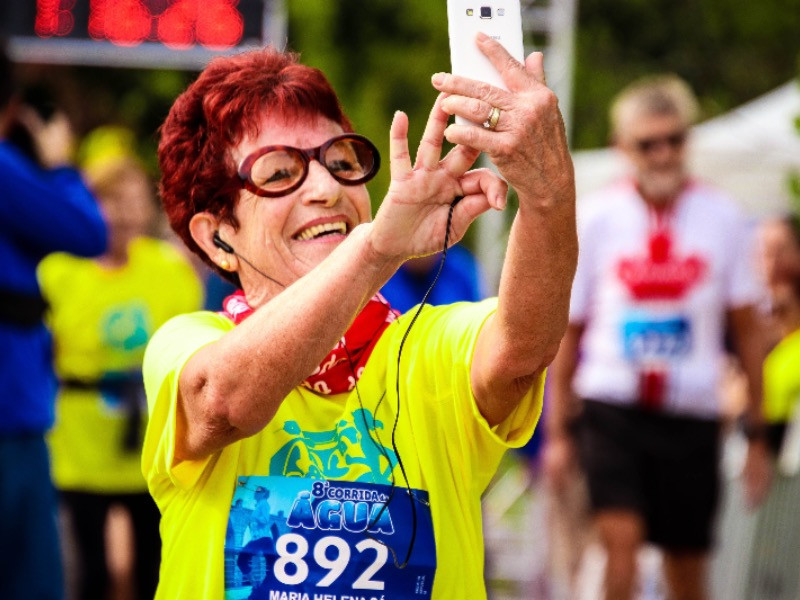
Southeast Asia’s Yolds are not slowing down. They are changing what ageing looks like.
Active ageing in Southeast Asia in 2026 no longer means a gentle walk and a seat in the shade. The Yolds, people aged 60 to 74, are the healthiest, most digitally connected and most self-funding group of older consumers the region has ever had, and they are choosing activities that look surprisingly like what their grandchildren do: parkour, esports, pickleball, dance battles and selling on TikTok Shop.
This matters commercially because Southeast Asia is ageing faster than any region before it. The region already has about 89.8 million people aged 60 and over, and that number will pass 170 million by 2050. Singapore becomes a super-aged society in 2026, and Thailand follows by 2029. Yet most marketing still treats “seniors” as one frail, dependent segment.
What is a “Yold”?
In our October 2026 Silver Economy Strategic Briefing, Illuminate Asia splits the silver market into three life stages rather than one “elderly” segment:
- Yolds (“young olds”, 60 to 74): healthy, often still earning, and spending on themselves.
- Old-olds (75 to 84): rising need for assistance and management of chronic conditions.
- Frail (85 and over): dependency-led, usually paid for by family or a care facility.
The Yolds are where active ageing is happening, and they are the first silver cohort that brands can reach with aspiration rather than reassurance.
Nine examples of how Southeast Asia’s seniors are keeping active in 2025 and 2026
- Parkour in an Ang Mo Kio park (Singapore) - Movement Singapore runs parkour classes for around 25 seniors three mornings a week in a neighbourhood park in Ang Mo Kio. Participants crawl, roll, vault and leap. Participants report greater flexibility and strength. (SilverStreak, 2024)
- Esports and Street Fighter (Singapore) - In June 2026 OCBC and Lions Befrienders launched a free esports programme for 200 seniors, with 2,400 coaching sessions covering Nintendo Switch Sports, Just Dance, Street Fighter 6 and Counter-Strike 2. The first cohort is set to compete in a national seniors esports competition, “Silver Showdown”, in December 2026. Lions Befrienders says seniors want more than arts and crafts, board games and karaoke. (OCBC, June 2026)
- Pickleball tournaments (Singapore) - Singapore now has over 5,000 active pickleball players, and over-50s are entering amateur categories at international opens. Some players are in their eighties and still train weekly, and Care Corner and OCBC are coaching 100 seniors over two years. The appeal is a small court, an easy start and a meal together afterwards. (The Straits Times, August 2026)
- Barangay Zumba competitions (the Philippines) - During Elderly Filipino Week in October 2026, senior citizen teams from several barangays in Bauang, La Union competed for a Zumba championship (PIA, October 2026). In Puerto Princesa, Palawan, the Department of Health paired a “Hataw Sayaw” Zumba contest with free diabetes and hypertension screening in a shopping mall. One 79-year-old competitor summed it up: “Maganda ang dancing sa mind, sa mood mo” (dancing is good for your mind and your mood). (PIA, May 2025)
- Record-breaking dance and late-night livestreams (Vietnam) - In September 2026, Hanoi launched its Action Month for Older Persons with a record-setting dance performance by older people (Vietnam+, September 2026). Online, Vietnamese sellers aged roughly 60 to 80 are livestreaming on TikTok Shop, often between 1am and 3am. One 67-year-old seller has more than 1.5 million followers and paid brand deals. (Tuoi Tre News, August 2025)
- First-time dancers and a world-medal taekwondo coach (Malaysia) - At Taylor’s University’s Active Ageing Festival in Selangor in September 2025, eight dancers over 60 with no previous dance experience opened the show (Twentytwo13, 2025). In Klang, a husband-and-wife pair of taekwondo coaches, aged 71 and 66, still train students at their own academy, and she won silver at the 2024 World Poomsae Championships. (Bernama, August 2026)
- Going back to school (Indonesia and Thailand) - Indonesia now runs 2,122 Sekolah Lansia (elderly schools) across every province, with 23,217 participants as of November 2025. Run by the national population and family planning agency (BKKBN), the classes cover physical, spiritual, intellectual and vocational wellbeing, plus digital skills such as spotting online scams. (GovInsider, 2025) Similarly, in 2026 Thailand’s Department of Older Persons published rules in the Royal Gazette that allow Schools for the Elderly to be set up nationwide. Their activities include health care, digital skills, earning extra income and social engagement. (Thairath, August 2026)
- A fitness icon for the next silver generation (Indonesia) - Former bodybuilding champion Ade Rai, now 56, has become one of Indonesia’s best-known health advocates. Through the Rai Institute and his social channels, he promotes drug-free, sustainable fitness and simple daily habits, such as walking after meals. He is not yet a Yold, but he shows Indonesia’s next cohort of seniors that ageing can mean strength and independence, not slowing down. (Instagram: @ade_rai)
- Restaurants hiring the over-60s (Indonesia) - In 2024 Boga Group, owner of Pepper Lunch, Bakerzin and Kimukatsu, began hiring people aged 60 and over, mostly as servers on flexible four-hour shifts. Its “Saya Lansia Saya Aktif” (I’m a senior, I’m active) campaign framed older people as capable workers who still want to contribute and earn, not as dependants. (RMOL, May 2024; Pepper Lunch Instagram)
The cultural shift: from “golden years” to “game on”
Semiotics gives us a useful way to read this. Any culture holds three kinds of codes at once: residual codes that are fading, dominant codes that feel normal today, and emergent codes that point to what comes next. For the Southeast Asian Silver Economy:
- Residual: ageing as decline. Walking sticks, hospital whites, a hand resting on a frail shoulder, sombre music. The senior is someone to be cared for.
- Dominant: ageing as rest. The “golden years”: gardening, grandchildren, a cruise, tai chi. The senior has earned the right to slow down.
- Emergent: ageing as capability and play. Competition, team kit, neon trainers, controllers, livestreams, leaderboards. The senior is a player, a performer and sometimes a seller.
The signals above sit firmly in the emergent code. What makes them powerful is the borrowing: seniors are adopting the formats of youth culture (parkour, esports, dance battles, TikTok) rather than waiting for age-appropriate versions to be designed for them.
Why it works: four behavioural science lenses
- Identity beats instruction - People act in line with who they believe they are (identity-based motivation). A health warning tells someone they are at risk. A parkour class or a barangay Zumba team tells them they are an athlete. The second message is far more motivating, and it is how these programmes recruit.
- How you see ageing shapes how you age - Research by Yale’s Becca Levy found that older people with more positive views of their own ageing lived, on average, 7.5 years longer than those with negative views (Levy et al., 2002). Imagery that shows seniors as frail is not neutral. It can reinforce the self-stereotypes that keep people inactive.
- Belonging and routine do the heavy lifting - Almost every example above is a group activity on a fixed schedule: a Tuesday class, a weekly match, a team representing a barangay. Social commitment works as a commitment device. As one Singapore parkour participant put it, “It’s always nice to hear words like ‘see you next week’ after class.”
- Frame the gain as independence, not health - The benefits seniors talk about are concrete and personal: opening a jar, walking faster, keeping up with grandchildren, earning their own money. These are framed around keeping control of daily life, which matters more to most people than abstract health scores. Fear of losing independence is a strong motivator, but it works best when the activity is presented as a way to keep it.
A reality check
The Yolds are not the whole silver market, and active ageing is not universal. In Singapore, the share of people aged 60 and over who play sport every week fell from 74% in 2022 to 67% in 2024, which is why Sport Singapore launched the Seniors National Games (Sport Singapore, 2025). In Thailand, our briefing estimates around 677,000 affluent Yolds compared with about 4.5 million seniors in a mass, frugal tier. Many of the most visible examples are also free or subsidised programmes by the government, so brands should not assume a large paying market for premium senior fitness yet.
The opportunity is real, but it is shaped by stage of ageing, income and existing community infrastructure in each market.
What this means for brands in Southeast Asia
- Retire the frailty codes. Audit your imagery, casting and language. If your senior communication still uses walking sticks, beige and soft focus, you are speaking to the 85-year-old, not the 65-year-old.
- Sell capability outcomes. “Open the jar yourself” and “keep up with the grandkids” beat “supports joint health”. Lead with what the product lets people keep doing.
- Build the team, not just the product. Classes, leagues, clubs and challenges create belonging and repeat behaviour. Sponsorship of community formats often works better than above-the-line advertising.
- Plug into existing infrastructure. Active Ageing Centres in Singapore, senior citizens’ offices (OSCA) and barangays in the Philippines, Thailand’s new Schools for the Elderly and Vietnam’s Association of the Elderly already gather the audience.
- Borrow youth formats with care. Esports, dance challenges and livestreaming work because they are not “for old people”. Respect that. Adapt the rules, not the dignity.
- Price for the market stage. Premium active-ageing products fit Singapore and affluent urban Thailand. Elsewhere, community, low-ticket and subsidised models will scale faster.
Where Illuminate Asia fits in
Illuminate Asia helps brands understand and win across Southeast Asia. Our Silver Economy Strategic Briefing (October 2026) sizes the opportunity across six markets, and our teams across the region combine consumer insight, semiotics and behavioural science to help you:
- Segment the market (such as the beyond “60+”, starting with the Yolds).
- Audit your brand’s codes and develop imagery and messaging that feels emergent, not residual.
- Test propositions with real consumers in Indonesia, Singapore, Malaysia, Thailand, Vietnam and the Philippines.
To request the briefing or discuss a project, contact us at info@illuminateasia.com.
FAQs
- What does “Yold” mean? - “Yold” is short for “young-old” and describes people aged 60 to 74. In Southeast Asia they are typically healthier, more digitally active and more likely to be earning or spending on themselves than older age groups.
- How are seniors in Southeast Asia keeping active in 2026? - Examples include senior parkour classes and esports programmes in Singapore, barangay Zumba competitions in the Philippines, record-setting senior dance events and TikTok livestream selling in Vietnam, dance festivals and competitive martial arts in Malaysia, and nationwide Schools for the Elderly in Thailand.
- Why does active ageing matter for businesses? - Southeast Asia’s 60+ population is about 89.8 million and will pass 170 million by 2050. The Yolds are the most self-funding part of that market, and they respond to brands that treat them as capable rather than frail.
- Which Southeast Asian market is most advanced in active ageing? - Singapore, which becomes super-aged in 2026 and funds active ageing through its S$3.5 billion Age Well SG programme and a network of Active Ageing Centres. Thailand follows closely as it moves towards super-aged status by 2029.
- How should brands advertise to older consumers in Asia? - Avoid imagery of frailty and dependence. Show capability, community and play, frame benefits around independence, and work through trusted community channels such as senior centres and local associations.
REFERENCES
- Illuminate Asia, Ageing Gracefully: The Southeast Asia Silver Economy Strategic Briefing, October 2026.
- SilverStreak: Senior parkour in Singapore (2024)
- OCBC and Lions Befrienders senior esports programme (June 2026)
- The Straits Times via Care Corner: Pickleball for seniors (August 2026)
- Sport Singapore: Seniors National Games (October 2025)
- PIA: Zumba competition, Bauang, La Union (October 2026)
- PIA: DOH active lifestyle drive, Puerto Princesa (May 2025)
- Vietnam+: Record dance performance by older people (September 2026)
- Tuoi Tre News: Elderly livestream sellers in Vietnam (August 2025)
- Twentytwo13: Active Ageing Festival 2025, Malaysia
- Bernama: Taekwondo coaches and active ageing (August 2026)
- Thairath: Schools for the Elderly nationwide (August 2026)
- American Psychological Association: Levy et al. (2002), positive self-perceptions of ageing and longevity
- https://www.instagram.com/raiinstitute/reels/
- https://www.instagram.com/ade_rai/
- https://www.youtube.com/@duniaaderai6302
- https://rmol.id/bisnis/read/2024/05/24/621670/berupaya-hilangkan-diskriminasi-umur-boga-group-mulai-pekerjakan-lansia
- https://www.instagram.com/p/C8Yw9aYy6Wu/