

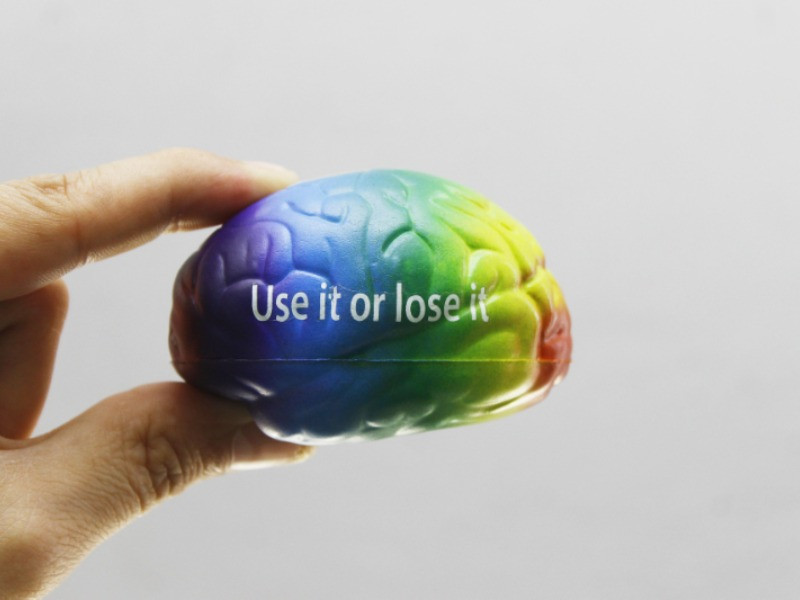
A 19th-century psychological discovery explains the modern marketing crisis: the human brain is designed to delete your brand. Here is the mechanics of memory decay and how to fight it.
Sixty days ago, your company may have launched a major advertising campaign. The creative was sharp, the media buy was significant, and the initial metrics showed a spike in attention. Yet today, as you look at the quarterly sales figures, the needle has barely moved.
The easiest scapegoat is the creative execution or a shift in competitor activity. But the real culprit is often something far more fundamental, something that sits outside the control of any CMO. The primary enemy of brand growth isn't the competition; it is human biology.
Your customers are biologically hardwired to forget you.
In the C-suite, marketing is often discussed in terms of persuasion, emotion, and acquisition. We tend to ignore the underlying cognitive plumbing that dictates whether any of those efforts stick. Understanding the mechanics of memory decay - specifically the ruthless efficiency of the human brain - is essential for any leader trying to justify marketing expenditure beyond short-term sales activation.
If you don’t understand how the bucket leaks, you will waste a fortune trying to fill it.
The Mechanics of the Vanishing Act
The foundational science of why brands fade comes from 1885, courtesy of German psychologist Hermann Ebbinghaus. Through rigorous self-experimentation, Ebbinghaus mapped the rate at which humans forget information. The resulting "Forgetting Curve" was not a gentle slope; it was a cliff.
Ebbinghaus found that within 24 hours of learning something new, the average person forgets roughly 70% of the details. Within a week, retention drops to around 25%. While emotional resonance can slightly flatten this curve, the trajectory is undeniable.
For over a century, this was just an observable phenomenon. Today, modern neuroscience explains the mechanism behind it. It comes down to biological energy efficiency.
The human brain is expensive to run, consuming roughly 20% of the body’s energy. To conserve resources, it engages in a continuous process called "synaptic pruning." When a consumer encounters your brand - sees an ad, hears a jingle - neurons fire in a specific pattern, creating a chemical pathway known as a synapse.
Think of this pathway like a trail beaten through tall grass. The first time a consumer walks it, the trail is faint. If they don't walk it again soon, the grass grows back, and the path disappears. The brain physically disconnects neural pathways that aren't used frequently. It is an aggressive, biological spam filter designed to delete anything deemed irrelevant to immediate survival.
In the context of branding, "irrelevant" means anything that hasn't been recently reinforced.
The Trap: Recognition vs. Recall
This biological reality creates a specific, dangerous problem for brands. The decay process doesn't affect all types of memory equally. It disproportionately attacks your most valuable asset: Brand Recall.
It is vital to distinguish between two cognitive states:
Recognition ("I know you"): This is passive. A consumer sees your logo in a supermarket and thinks, "I know them." This type of memory is durable and slow to decay.
Recall ("I want you"): This is active. A consumer experiences a need - they are thirsty, bored, or require insurance - and their brain must instinctively retrieve your brand as the solution.
Memory decay attacks the retrieval path first. If a brand goes "dark" and stops communicating, consumers don't suddenly develop amnesia about the brand's existence; recognition remains high. What fades is the neural link between the consumer's need state and the brand's identity.
When the brain prunes those synapses, the consumer still "knows" your brand, but they stop thinking of you when it's time to buy. You become famous, but irrelevant. This is the state many established brands find themselves in: spending millions to maintain high "awareness" scores while actual purchase consideration quietly erodes.
The Long and The Short of Biology
This biological framework provides the scientific proof for one of the most important economic theories in modern marketing: Les Binet and Peter Field’s "The Long and the Short of It."
Binet and Field famously argue that for maximum growth, brands need a 60/40 split between Brand Building (The Long) and Sales Activation (The Short). When viewed through the lens of memory decay, this isn't just a budgeting rule: it is a biological necessity.
"The Short" (Performance Marketing) is purely a harvesting mechanism. When you run a "Click Here" or "20% Off" ad, you are not building new memory structures; you are exploiting the memories that already exist. You are picking the fruit from the tree. If the memory of the brand is fresh, activation works wonders.
"The Long" (Brand Building) is the only force that fights the Ebbinghaus curve. Emotional, storytelling-based advertising is "watering the roots." It reinforces the neural pathways, flooding the synapses with emotion (which acts as a memory fixative) to ensure the path remains open for the future.
The danger arises when companies shift their budgets entirely to performance marketing to chase immediate ROI. In biological terms, they are harvesting the fruit without watering the tree. For a while, the numbers look great as they monetize existing mental availability. But as the "Long" activity ceases, the Ebbinghaus curve takes over. The grass grows back over the neural path. Eventually, the performance ads stop working because the underlying recall has decayed.
Fighting the Fade: The Strategic Imperative
Once you accept that the consumer’s brain is actively trying to delete your brand to save energy, marketing strategy shifts from "educating" the consumer to "maintaining the neural pathway."
If the natural state of a brand memory is decay, advertising is the artificial force required to counteract nature. Here is how leading brands fight the fade.
1. Frequency Beats Impact: The Ebbinghaus curve teaches us that the only way to reset the forgetting process is re-exposure. Every time a consumer encounters the brand, the synapse fires again, strengthening the chemical trail and pushing retention back up to 100%.
This suggests that the common "burst" strategy - concentrating budget into a few loud - weeks followed by months of silence - is scientifically flawed. During the silence, the grass grows back. An "always-on" strategy, providing a consistent, lighter pulse of communication, is far more effective at fighting synaptic pruning than sporadic shouting.
2. The Value of Boring Consistency: Marketers love novelty; the brain loves shortcuts. To ensure rapid retrieval, a brand must use Distinctive Brand Assets - colors, logos, sounds, characters - that act as mental hooks.
These assets are the signposts on the neural pathway. When a consumer sees the McDonald’s Golden Arches, their brain doesn't need to expend energy re-learning what the company does. The visual shortcut instantly retrieves the entire brand memory structure.
The greatest danger to brand memory is often a new Marketing Director who gets bored with the current assets. Rebranding or radically changing codes is essentially voluntary synaptic pruning. You abandon the well-worn neural path you spent millions building and force the consumer to start beating a new trail from scratch.
3. The Maintenance Mindset: Ultimately, the science of memory decay reframes the purpose of advertising capital. A significant portion of the marketing budget isn't buying new customers; it is paying the "rent" on the mental space occupied by existing ones.
If you stop paying the rent, eviction is swift. The brain will reallocate that prime cognitive real estate to a competitor who is willing to reinforce the pathway. In the battle for mental availability, silence isn't just golden - it's terminal.
Conclusions:
Concerned about the silent drain on your ad spend? Illuminate Asia can help you measure your brand’s mental availability and fight the forgetting curve, so your budget builds permanent memory structures, not just temporary noise:
Distinctive Asset Audit: empirically test your brand codes (colors, sounds, logos) to identify exactly what triggers instant retrieval and what is just "wallpaper."
Category Entry Point (CEP) Mapping: move beyond passive awareness ("I know them") to measure active recall ("I want them") across specific consumer need states.
Brand Health Diagnostics: tracking that looks beyond short-term attribution to monitor the "Long" game - assessing the strength of neural pathways over time.
Communication Pre-testing: ensuring your creative has the emotional resonance and "stickiness" required to flatten the forgetting curve before you commit media spend.
Contact Illuminate Asia on info@illuminateasia.com to measure the fade, validate your assets, and stop the leak in your marketing bucket. Don’t just buy media space; secure mental real estate.