

Key takeouts:
- Gen Z rewards content that’s fast, funny, participatory, and authentic – rather than postcard-perfect polish.
- Adopting trending or viral audio, user generated content (UGC), and replying in a human, relatable tone typically lifts watch-time, comments, and shares. The case study of Pesona Indonesia, Indonesia’s tourism promotion campaign, shows how this shift can pay off.
- At the same time, it’s important to protect brand identity by setting a clear tone-of-voice rules and humour palette; ensuring content stays on trend without feeling random.
Who is Gen Z & why are they important in Indonesia?
Gen Z refers to those born 1997–2012. They’re a large and influential cohort, making up around 30% of the Indonesian population. They grew up as digital natives, with short-form video (including Tiktok), remixing culture, and chat threads as their normal. Hence, they tend to be more sceptical of traditional advertising and respond more to representation, humour, and community; they expect content that moves quickly, feels honest, and invites them in.
Gen Z are an important cohort as they buy directly (with their own money) but also hold a lot of influence to sway family purchase decisions. Gen Z are not only consumers, but cultural trendsetters, who set social and digital norms that older cohorts copy in terms of content styles, humour, and language. For example, Tiktok trends generally start with or gain traction from the Gen Z cohort.
What Gen Z Finds Engaging, and Why It Spreads:
- Humour over polish — For Gen Z, humour often resonates more than a highly polished brand image. The use of irony, deadpan wit and even a touch of absurdity lowers the barriers to tag, comment, and share for Gen Z consumers.
- For example, Bandung-born Pride Chicken (@pridechicken_id) shows how fast, self-aware humour, with playful copy and quick cuts can attract Gen Z. Their TikTok content leans into playful copywriting, exaggerated parodies, and quick-cut edits that mimic meme culture. Rather than looking perfectly refined, their posts feel spontaneous and relatable, exactly the kind of entertainment Gen Z wants to engage with. By prioritizing wit and absurdity over polish, Pride Chicken successfully taps into the digital humour style that defines today’s young consumers.
2. Participation by design — Gen Z doesn’t just want to watch; they want to take part. What attracts them is the chance to express themselves: their tastes, quirks, and points of view. Hence, they respond well to content that encourages them to join in – via challenges, user generated content, stitches/duets, templates, and filters – as it allows them to express themselves and show “this is who I am” or “this is my taste”.
- A great example is Indomie’s TikTok filter that asks users to rank their own best Indomie flavour. The format is playful yet simple: a split-screen with labels and image of Indomie, so users can just point. Each user can reveal their “Indomie hierarchy”, which often sparks debates, jokes, and relatable comments. This filter shows how simple and playful prompts can gather participation. By turning brand assets (e.g., Indomie packaging or flavours) into open invitations for self-expression, brand can attach themselves even more into Gen Z’s digital life.
- Note: every video should have a clear prompt (“Stitch this with…”, “Duet this and tag a friend”, “Rank this from best to worst”).
3. Leveraging Authenticity over perfection — For Gen Z, authenticity outweighs perfection. They are less impressed by flawless, glossy advertising and more attracted to real journeys that show progress and credibility. What resonates with them is progress, learning process, and imperfections along the way, because these make the brand feel “human”.
- For example, Somethinc (@somethincofficial) uses real consumer skin journey storytelling. Instead of only showing the end shots with a perfect skin, they highlight the process, learning and mess. It works in that it shows credibility over gloss; and the comment sections sometimes turn into a community space where users can exchange tips, share their own struggles, and cheer each other on.
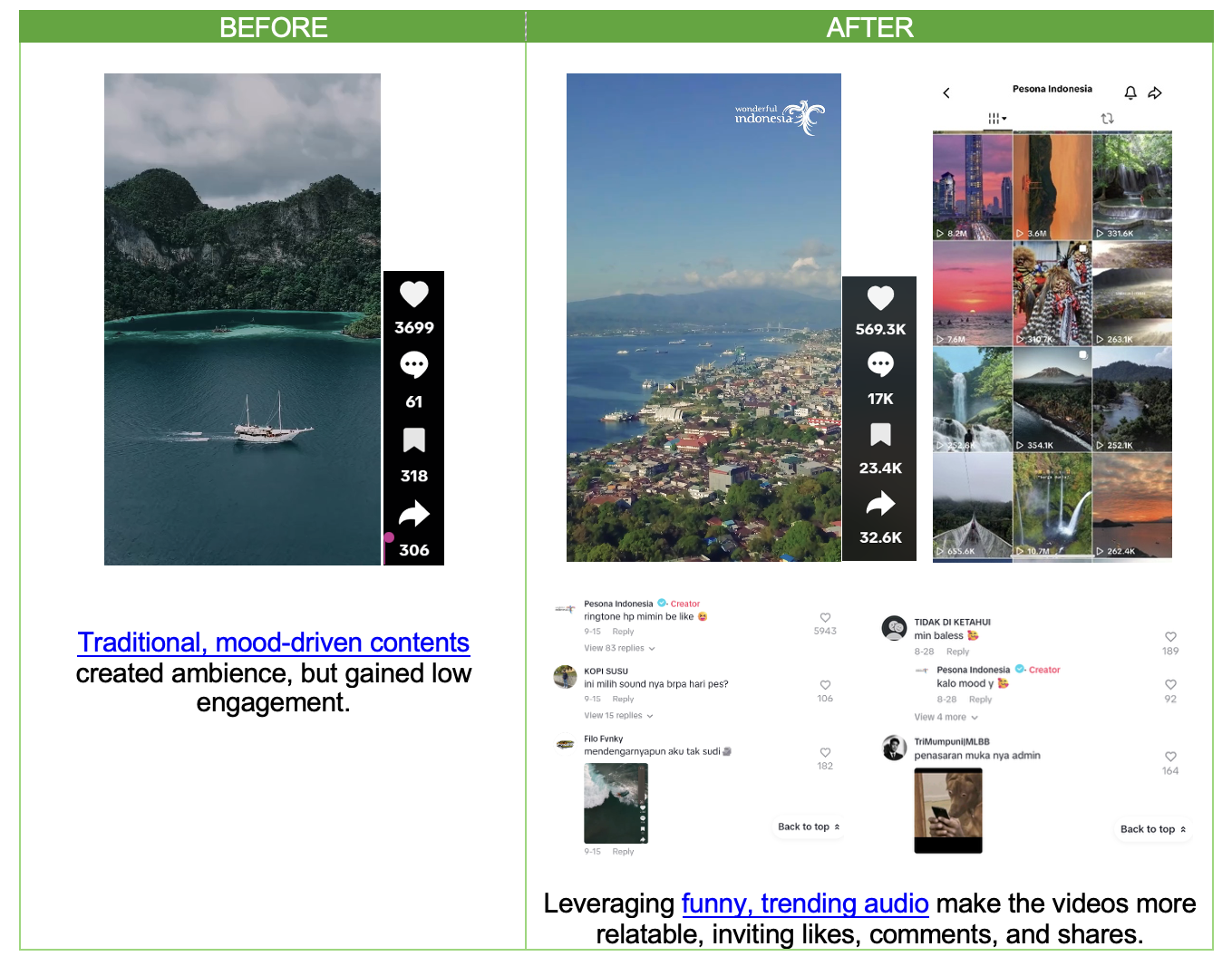
4. Show up in comments — For Gen Z, the conversation doesn’t end when the content is posted, it often follows in the comment section. Treating replies as a second content track is crucial, because fast, witty, and human responses compound reach and engagement amongst Gen Z. Brands that show up in the comment creates a two-way dialogue rather than one-way advertising. For example, Pesona Indonesia’s (@pesonaindonesia) TikTok account doesn’t just post beautiful sceneries with humorous and trending sounds but also replies to comments in the playful tone. This makes the audience feel seen and included, making it an opportunity to build a community.
5. Ride the sound — using sounds/music clips that carry a meme or trending audio; they’re a discovery layer — people search and join via the sound; as short-form video is the native grammar for Gen Z’s (see Pesona Indonesia Case Study below).
Case study: Pesona Indonesia (official tourism branding account)
Pesona Indonesia (@pesonaindonesia) is a tourism promotion campaign run by the Indonesian Ministry of Tourism and Creative Economy, aiming to promote Indonesia’s natural beauty and cultural richness. In early 2023, Pesona Indonesia decided to shift its digital strategy.
- From: The campaign initially relied on breathtaking visuals, backed by atmospheric music. While these early contents were visually stunning, they often felt distant and less relatable to younger audiences.
- To: They pivoted toward using viral, humorous, and trending audio that resonates strongly with Gen Z. They also began treating replies as part of the content itself; replying in a way that felt closer to Gen Z such as using light slang, emojis, playful banter, and reference to relatable topics. This approach makes the brand feel less like a government institution and more like a friend, which encourages audiences to interact further.
- The result: Pesona Indonesia gained significant boost in engagement (likes & comments). Their last video using conventional background music (posted in March 2023) gained only around 3.600 likes and 60 comments at the time this article is created. In contrast, their newer content style has consistently gathered tens or even hundreds of thousands of likes, along with thousands of comments.
Why did it work so well? For Gen Z, humour lowers the barrier to interact and encourages them to like, comment, tag their friends, and share the content. Also, on TikTok, audio itself acts as a participation signal: trending sounds invite users to remix, stitch, or duet, turning passive viewers into creators. Finally, the use of quick, relatable replies keeps the engagement loop spinning. Comments don’t just sit in idle, but they also turn into content. As a result, the brand become more of a participant in Gen Z’s digital world.
Conclusions:
Planning a Gen Z push? Illuminate Asia can help you understand Gen Z and the cultural context across Southeast Asia — so your strategy lands first time, in-market:
- Trend & foresight scans: rolling pulses and brief-specific deep dives across Indonesia, Singapore, Thailand, Malaysia, Vietnam, Philippines.
- Audience definition & need states: who they are, what they want, and how they decide; by market and category.
- Cultural code maps: tone, humour, visual cues, and participation formats that feel native locally (not imported).
- Platform grammar guidance: how UGC, Stitch, Duet, and trending audio really show up by market, and where the guardrails are
- Pre-flight checks with Gen Z cohorts: quick-turn concept/content read—before you spend media.
Contact Illuminate Asia on info@illuminateasia.com to map the audience, decode the cultural levers, and build evidence-based guardrails before briefing your creative partners. Less guesswork; faster alignment; work that Gen Z don’t just watch, they engage with.
FAQs:
- What is UGC and why does it matter for Gen Z? - UGC is user-made content (reviews, stitches, duets). It signals trust and fuels platform-native reach.
- What’s the difference between Stitch and Duet? Stitch adds a short segment of another video into yours; Duet plays video side-by-side with the original
- Is this only for “fun” categories? No; it can apply for many categories and sectors such as education, and finance which can benefit from clear prompts, useful info, and human replies.
- Where can I see local examples? Pesona Indonesia (official hub), Wonderful Indonesia site, Somethinc (site/IG), Indomie’s ecosystem.
- Is TikTok mandatory, or will Instagram Reels / YouTube Shorts do? Use all three if possible. TikTok = trend velocity and remix culture; Reels = brand safety + reach with older cohorts; Shorts = searchability + evergreen tail. Repurpose the idea, not the exact cut.
- How does research reduce risk here? Pre-flight with the right Gen Z cohorts catches tone misses and wasted formats early. Audience definitions + cultural code maps = fewer rewrites, cleaner briefs.
- How often should we post to see movement? 3 posts/week for 4 weeks is a solid test. Pair with same-day comment-ops (reply with video to 2–3 comments per post). Consistency beats bursts.
- How do we avoid going off-brand when we chase trends? Use tone lanes (pre-agreed voice options) and a humour palette (what jokes are in/out). Trends are wrappers; your message stays constant.
LINKS:
- Cover Image: https://unsplash.com/photos/a-person-taking-a-picture-of-a-man-and-woman-8IhR5aunsko
- Pride Chicken TikTok: https://www.tiktok.com/@pridechicken_id
- Pride Chicken Video Content: https://www.tiktok.com/@pridechicken_id/video/7457136396575280392?q=pride%20chicken&t=1751993199035
- Indomie Instagram: https://www.instagram.com/indomie/
- Indomie Filter Video Content: https://www.tiktok.com/@ririorzl/video/7329365480760724741?q=indomie%20rasa%20ranking%20filter&t=1758682778702
- Somethinc TikTok: https://www.tiktok.com/@somethincofficial
- Somethinc Consumer Skin Journey: https://www.tiktok.com/@belzkys/video/7205898767323778330?q=somethinc%20skin%20journey&t=1751993698712
- Pesona Indonesia TikTok: https://www.tiktok.com/@pesonaindonesia
- Pesona Indonesia comment reply (1): https://www.tiktok.com/@pesonaindonesia/video/7543560165895736584?lang=en
- Pesona Indonesia comment reply (2): https://www.tiktok.com/@pesonaindonesia/video/7550260741077486855?lang=en
- Pesona Indonesia old-style video: https://www.tiktok.com/@pesonaindonesia/video/7214871938588511494?_r=1&_t=ZS-8xqxzdvDQ2R
- Pesona Indonesia new-style video: https://www.tiktok.com/@pesonaindonesia/video/7498694841400839432