


For years, brands have relied on a familiar narrative when speaking to women. Strength, ambition, resilience. The idea that progress comes from pushing forward, and that empowerment is about doing more, going further, and not stopping.
It made sense at the time. It reflected a real cultural moment. Women were expanding their presence across industries, spaces, and roles that had not always been designed with them in mind. Brands that amplified this message felt relevant because they were aligned with that momentum.
But the context has changed.
Today, the question is no longer whether women can participate. In most cases, they are already present across the workforce, public spaces, leadership, and culture. Participation is no longer a barrier.
The tension has shifted. From access to sustainability. From proving capability to being expected to sustain it continuously.
This shift is already reflected in how brands are communicating. Looking at recent campaigns, a pattern begins to emerge in how they move away from pushing for more and toward responding to the realities women are already navigating.
Wardah and the Power of Normalization
Source: https://www.instagram.com/p/DWwFSDLj78N/?img_index=1
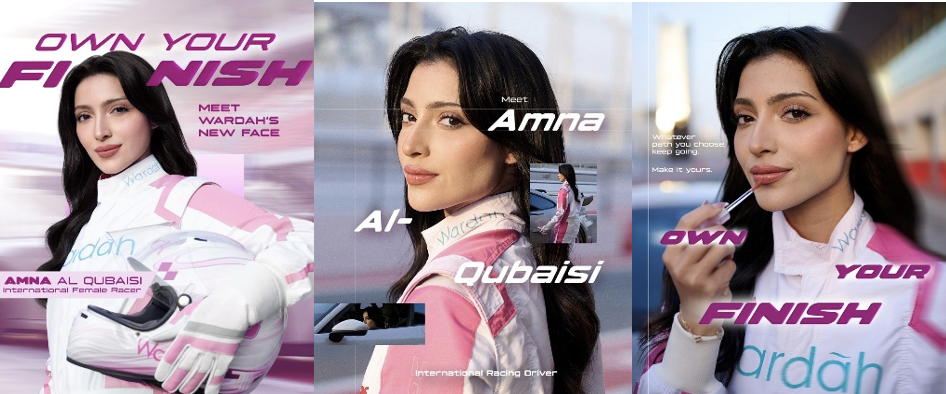
Wardah’s collaboration with Amna Al Qubaisi is a good example of how Wardah’s communication is becoming more subtle but more effective.
On the surface, it could have been framed as a classic empowerment story. A female driver breaking into a male-dominated sport. A brand supporting representation.
But what makes it work is what it doesn’t do.
It doesn’t over-explain. It doesn’t position her as an exception. It simply places her there, as part of the world. A Muslim woman in motorsport, backed by an Indonesian modest beauty brand, presented without justification.
That shift matters because instead of asking the audience to admire something unusual, it quietly resets what feels normal. It moves away from “this is inspiring because it’s rare” to “this shouldn’t feel rare in the first place.”
And that is a more sustainable way of shifting perception, especially in categories like beauty, where identity, culture, and aspiration are closely intertwined.
Laurier: Making Spaces for Less
Source: https://x.com/sosmedkeras/status/1975892013515190743 https://x.com/Laurier_ID/status/1976495324895248529/photo/1
If Wardah addresses external perception, Laurier leans into something more internal.
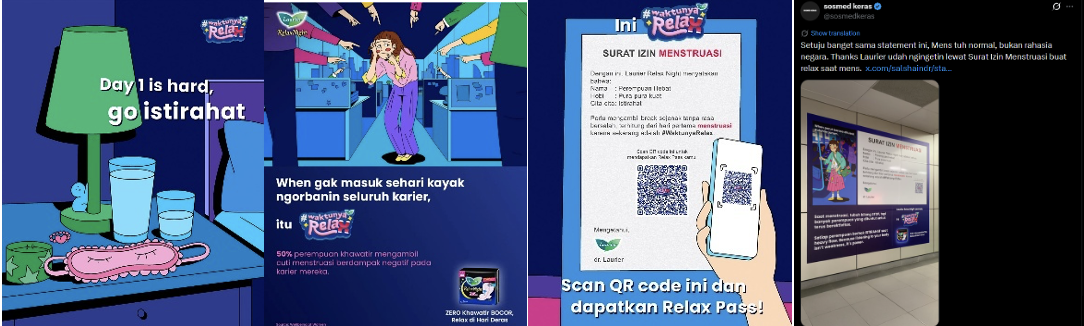
The “Menstruation Leave Letter” works because it picks up on a mismatch many women already live with. During menstruation, energy drops, focus shifts, and discomfort is real. But expectations around productivity don’t move with it.
Most brands would respond with encouragement: Stay strong, Keep going, You’ve got this.
Laurier goes in a different direction, they introduce permission.
Permission to pause. Permission to not operate at full capacity. Permission to acknowledge that the body has limits, without framing those limits as a lack of discipline.
What makes this land is how familiar it feels. There’s no new behaviour being introduced here. Women are already adjusting, already coping, already making trade-offs. The campaign simply removes the guilt around it.
Laurier shifts the role of communication from pushing action to making what’s already happening feel acceptable.
Sculpt and Shifting Accountability
Source: https://www.instagram.com/p/DVTMTq2EurF/?img_index=1,https://www.instagram.com/p/DRhEiRwErSe/?img_index=1, https://www.instagram.com/p/DWYkwp8EWvP/?img_index=1
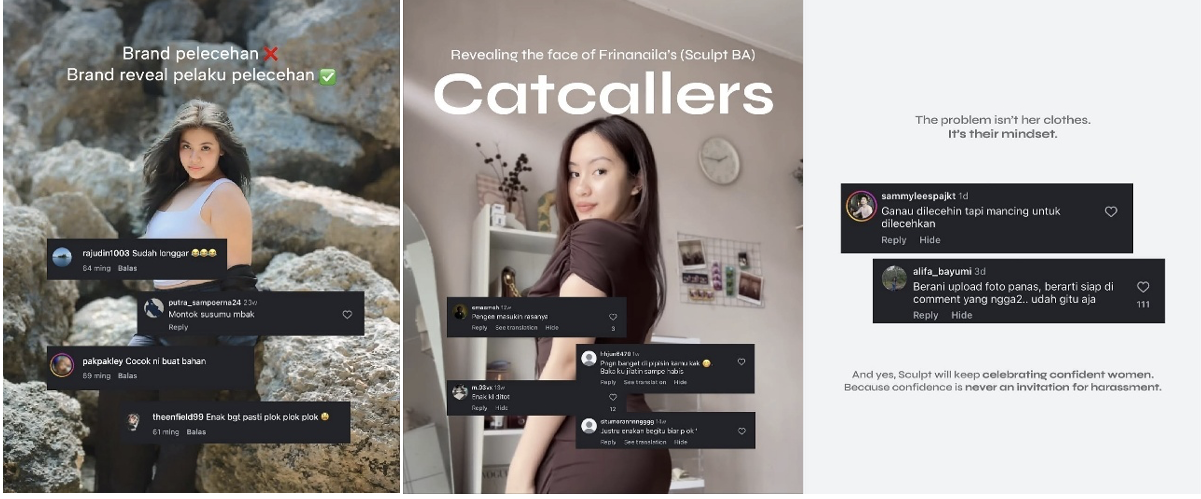
Sculpt, a local shapewear brand, has been consistent in how they show up. They feature real bodies, real proportions, and women who don’t feel overly curated.
That choice comes with a predictable response. The moment real bodies are put out there, especially in a category like shapewear, the reaction often mirrors what women already deal with elsewhere, from objectifying comments to body shaming and outright harassment, now happening directly in their own content.
Through their “Revealing the Catcallers” and “Sculpt Brave Fund” initiatives, Sculpt doesn’t filter these responses out. Instead, they bring them to the surface by sharing actual comments received by their brand ambassadors and creators, and taking it a step further by calling out the accounts behind them. In some cases, they even invite other women to share similar experiences and tag the perpetrators themselves.
The campaign moves beyond awareness and introduces consequence, or at least a level of visibility that makes the behaviour harder to ignore. It also changes the role of the brand. Sculpt is not just representing women, it is actively protecting the space it creates, turning what is usually an individual experience into something collective.
The communication reshapes the boundaries of the space, clearly defining what is and isn’t acceptable.
What This Means for Brands
Across these examples, the shift is consistent.
- Wardah normalizes presence
- Laurier reduces internal pressure
- Sculpt sets external boundaries
While the approaches differ, they point in the same direction, moving away from pushing people forward and toward reducing what makes it difficult to keep going.
It moves away from amplifying ambition and toward addressing the friction that comes with sustaining it. Whether that shows up as normalizing presence, validating lived experience, or setting clearer boundaries, the underlying approach is the same.
Relevance today comes from reading the situation more accurately and responding in ways that reduce pressure rather than add to it.
Want to Move Beyond Surface-Level Empowerment?
Illuminate Asia helps brands identify real tensions, build distinctive responses, and translate insight into communication that actually lands.
If you are looking to sharpen your brand’s role in today’s context, reach out at info@illuminateasia.com
FAQs
- What is changing in how brands communicate to women?
Brands are shifting from aspirational messaging to addressing real-life pressures. The focus is no longer on pushing ambition, but on making it more sustainable. - Why is traditional empowerment messaging becoming less effective?
Because it assumes women need more motivation, while many are already navigating high expectations. The real tension lies in sustaining that, not achieving it. - What makes campaigns like Wardah, Laurier, and Sculpt effective?
They respond to real conditions. Wardah normalizes presence, Laurier removes internal pressure, and Sculpt sets clear boundaries on behaviour. - What does “normalization” mean in brand communication?
It means presenting something without framing it as exceptional, allowing it to feel expected rather than rare. - What should brands focus on going forward?
Brands should identify where pressure exists and respond in ways that reduce it, rather than adding more expectations